
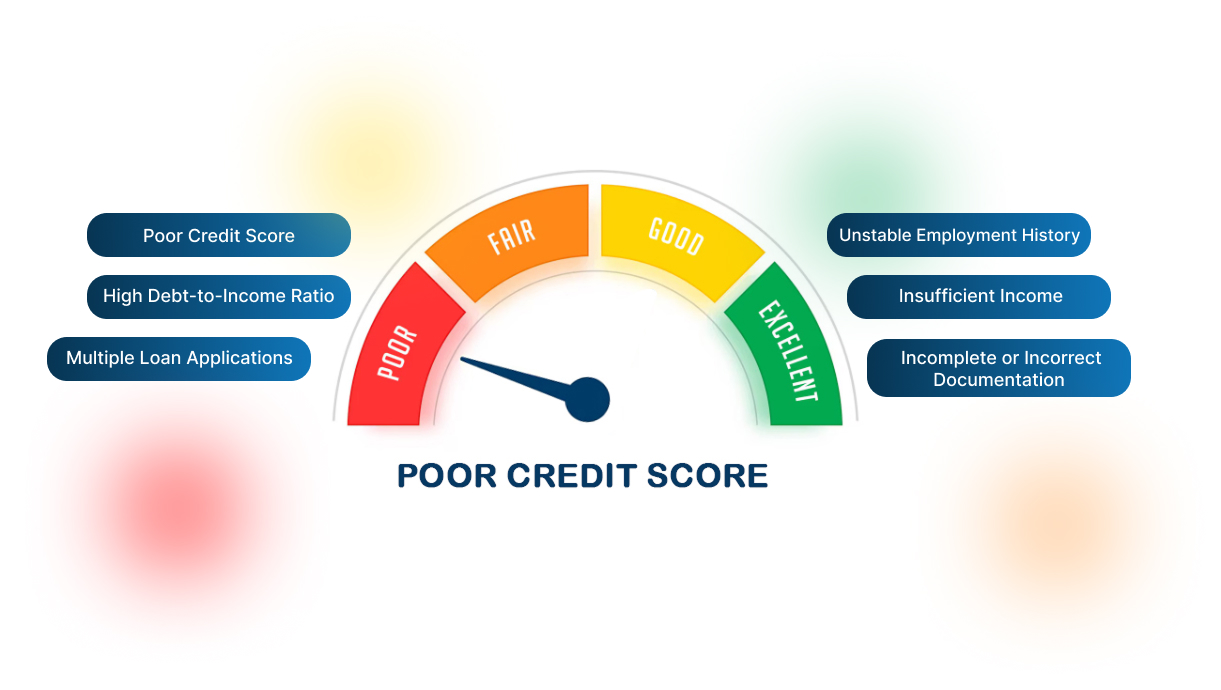
Personal loans are one of the most popular ways to access quick funds. They are unsecured, flexible, and come with minimal documentation. But while the process seems simple, many applications are rejected at the very first stage. Understanding why this happens can save you time, effort, and disappointment.
1. Poor Credit Score
Lenders rely heavily on your credit score to judge your repayment behaviour. A score below 650 signals risk, making lenders hesitant to approve your application.
- Delayed or missed EMI payments
- High credit card balances
- Past defaults or written-off loans
2. High Debt-to-Income Ratio
Even if you earn well, lenders look at how much of your income is already tied up in EMIs. If most of your salary goes toward repaying existing debts, you may not have enough left to handle a new loan.
- Too many active loans
- Heavy use of credit cards
- Existing EMIs exceeding 50% of income.
3. Multiple Loan Applications
Every time you apply for a loan, it shows up as a “hard inquiry” in your credit report. Too many applications in a short span make you look credit-hungry, raising doubts in lenders’ minds.
- Applying to several banks at once
- Frequent reapplications after rejections
- Lack of research before applying
4. Unstable Employment History
Lenders prefer borrowers with stable jobs and a consistent income source. If you’ve switched jobs too often or have gaps in employment, it creates uncertainty about your repayment capacity.
- Changing jobs frequently
- Working in high-risk or unrecognised companies
- Lack of steady income proof for self-employed individuals
5. Insufficient Income
Every lender sets a minimum income requirement for personal loan eligibility. If your salary doesn’t meet that threshold, your application may get rejected, regardless of your credit score.
- Applying for higher loan amounts than your income supports
- Falling below the bank’s minimum income slab
- Lack of documented proof of income
6. Incomplete or Incorrect Documentation
Personal loans require proper KYC documents, salary slips, and bank statements. Even small mistakes—like mismatched signatures or missing papers—can lead to instant rejection.
- Submitting outdated bank statements
- Errors in ID or address proofs
- Missing income-related documents
Conclusion
A personal loan rejection doesn’t always mean you’re ineligible—it simply highlights areas where you need to improve. Most rejections stem from low credit scores, high debt, unstable jobs, or incomplete paperwork. By maintaining a healthy credit profile, keeping your debt-to-income ratio in check, and applying carefully with the right documents, you can boost your chances of instant approval. Remember, preparation is key: the stronger your financial profile, the harder it is for lenders to say “no.”